How to Explain Neurodivergence to Your Doctor
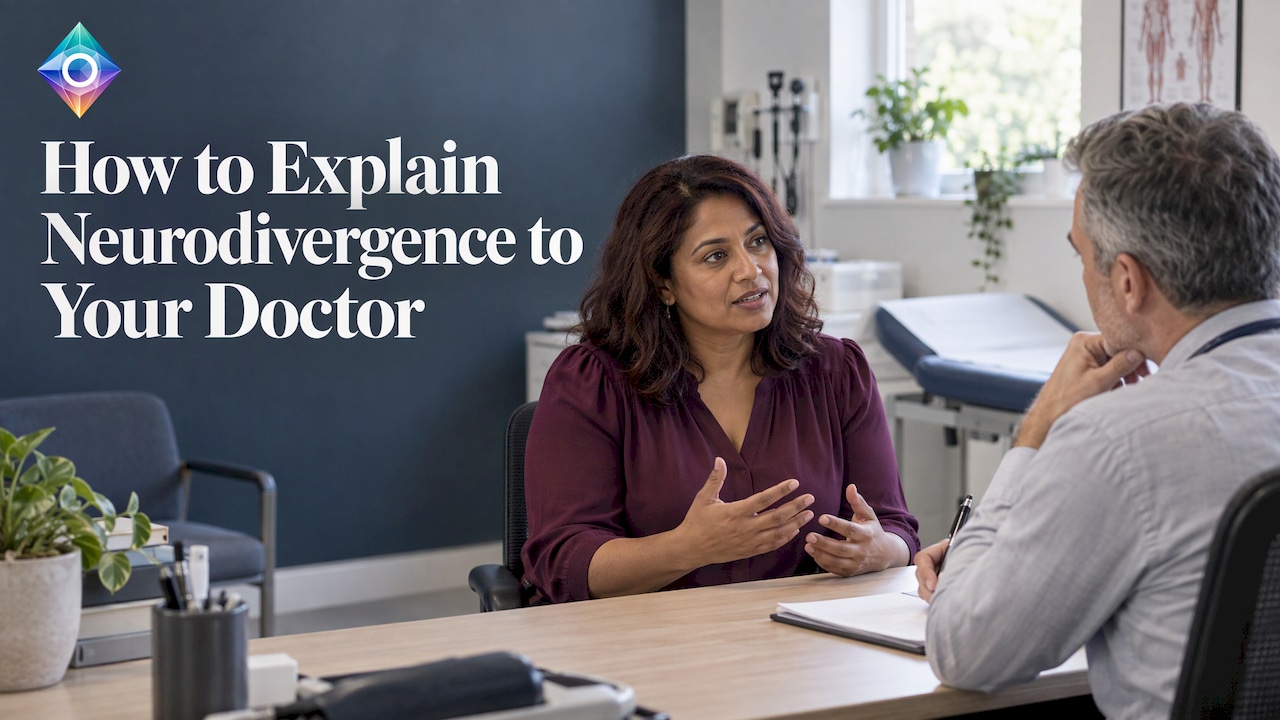
You explain neurodivergence to a doctor by describing specific, everyday examples of how your brain works, rather than offering a label, and by writing them down before the appointment. In the UK you do not need a diagnosis to ask your GP for help, so a clear one-page account of your traits, their history and their effect on daily life is the strongest thing you can bring, and the same account works for family.
Key Takeaways
- A formal diagnosis is not needed to recognise possible neurodivergent traits or to ask for support, according to Mental Health UK.
- Specific examples from home, work, friendships and childhood give clinicians more to work with than general statements such as “I’m forgetful”.
- Ask for what you need in the appointment itself: a longer slot, written information, one question at a time.
- If a clinician dismisses you without asking questions, a second opinion is a reasonable next step.
- With family, a short, concrete explanation tied to things they have already noticed usually lands better than a full lecture.
How do I explain neurodivergence to my doctor?
These six steps take you from a vague feeling to a conversation a GP can act on. Most of the work happens before you walk in.
- Write down your traits as examples, not labels. Pick four or five situations from home, school or work, friendships and childhood. RTN Mental Health gives the contrast: “I often forget appointments unless they’re written in three different places” tells a clinician far more than “I’m forgetful”. The common mistake is listing diagnoses you suspect and nothing else.
- Describe your typical day, not your best one. The same RTN guidance says to answer from typical experience, and to say so when something only works with huge amounts of effort. If you cope with alarms, routines or sheer determination, include that, because coping strategies are useful information too.
- Say when it started. Childhood history matters. Many assessment pathways ask when concerns were first noticed, and the Hampshire CTSH guidance for parents suggests noting this, especially before age 12.
- Say what it costs you. Note the effect on work, relationships, sleep, money or wellbeing. A GP deciding on a referral needs to see impact, so give one concrete consequence per area.
- State what you want from the appointment. For instance: a referral for assessment, a conversation about options, or adjustments to how care is delivered. Sensory Overload suggests a five-point note: what changed from your baseline, when it started, its pattern, how it affects daily life, and what you need.
- Ask for adjustments when you book. Trans Care BC advises requesting a longer appointment, lower lighting or a virtual consultation, handing over written notes, and asking for questions one at a time. In England, Scotland and Wales, Autism UK explains that reasonable adjustments are covered by the Equality Act 2010, and examples include arranging appointments by text or email instead of phone.
Appointments are short and clinicians are working under real pressure in everyday practice, so a page the doctor can read in a minute helps both of you.
If you want a structured starting point for step 1, our Free Adult Self-Assessment gives you an instant plain-language profile across 14 areas, with no email, account or data collection.
What does neurodivergent mean, and which words should I use?
Neurodivergent is a non-medical umbrella term. Mental Health UK describes it as commonly used for differences such as ADHD, autism, dyslexia, dyspraxia and Tourette syndrome. It is not a diagnosis, which is why a doctor will want to know the specifics.
Response, a UK mental health charity, separates the terms usefully:
- Neurodiversity is natural variation across all human brains.
- Neurodivergent describes one person whose brain works differently from the typical pattern.
- Neurotype is a category of mind, such as autism, ADHD or dyslexia.
Response also recommends describing traits rather than “signs and symptoms”, and notes that most of the neurodivergent community prefer identity-first language (“autistic person”). With a doctor, that means leading with what you experience: “noise wipes me out by mid-afternoon” gives them something to investigate.
What should I say to my GP to ask for an assessment?
You can open with one sentence and let your notes do the rest. Black Country ICB, an NHS body, advises describing difficulties at school, work, in relationships or daily life, explaining why you think autism or ADHD may be involved, and asking about referral options. It also states that you do not need a formal diagnosis to ask for help.
A workable opening: “I’ve had difficulties with organisation and focus since childhood, they are affecting my work, and I’d like to discuss a referral for an ADHD assessment.” Parents can adapt the wording the Hampshire CTSH guidance suggests: “I’m concerned that my child may have ADHD and I would like to discuss a referral for an ADHD assessment.”
Then ask three questions:
- What local assessment pathways exist, and what are the expected waiting times?
- Is the Right to Choose option available? (Hampshire CTSH lists it as something to ask about.)
- What support can I get while I wait?
Our guides on preparing for an ADHD assessment in the UK and preparing for an autism assessment go through the assessment itself in more detail, and how to describe ADHD symptoms to a clinician covers the wording.
What if my doctor doesn’t take me seriously?
Masking is a common reason a first appointment goes badly. Echo Autism’s toolkit explains that diagnosis rests on observed behaviour, and that many autistic adults have learned to mask, which is very hard to drop in front of a clinician you have just met. Trans Care BC also notes there can be pressure to mask during a medical visit, and that asking for what you need and going at your own pace is a sound approach.
The CHOP Autism Roadmap, from a US children’s hospital research centre, lists signs that a second opinion is worth seeking:
- the clinician says there is no point pursuing an adult evaluation
- they say you would have been diagnosed in childhood
- they rule out autism because you make eye contact or have achieved a lot
- they dismiss the possibility without asking you questions
Practical moves: bring a friend, partner or advocate, keep a record of dates and what was said, and ask for your concerns to be noted in your record. Autism UK adds that staff often lack enough autism knowledge to know what to change, so it helps to suggest the adjustments yourself. Your GP can also refer you elsewhere for a second opinion.
How do I explain neurodivergence to my family?
Start with your goal. Resilient Mind Counseling, a US practice, suggests deciding whether you want to inform, be believed, ask for specific support or explain past behaviour, and treating the talk as a process rather than a single event (guide). Their suggested plain wording is that it is a neurological difference in how your brain is wired and how you process the world.
Then tie it to things your relatives have already seen. The Neurodiversion site suggests a short framing may serve you better than a thorough one, along the lines of: “I’m autistic. It’s why noise wipes me out, why I take things literally, and why I need to know plans in advance.”
Expect two common reactions, and prepare a reply for each:
- “You don’t seem autistic.” Explain that you have learned to mask, which takes effort and hides the traits.
- “Isn’t everyone a little ADHD?” Say that ADHD difficulties are persistent, pervasive and have a significant effect on daily life.
Both replies come from the Resilient Mind guide. Finish with a clear, actionable request, such as “please text me plans a day ahead”, because families can act on that more easily than on a general plea for understanding.
How do I talk to family about my child’s neurodivergent traits?
Parents are often explaining a child’s needs to grandparents, aunts and uncles who see only the hard moments. Understood’s guide suggests asking to talk, starting small by describing the difficulties, saying where things stand with evaluation or diagnosis, and asking for help explicitly.
The Child Mind Institute recommends focusing on behaviour relatives have already noticed, for example that a lack of eye contact is not rudeness, and that meltdowns at family visits often come from difficulty with changes in routine. Raising Children Network adds that you choose when, who, what and how you tell, and that talking about strengths first and needs second helps others see the whole child.
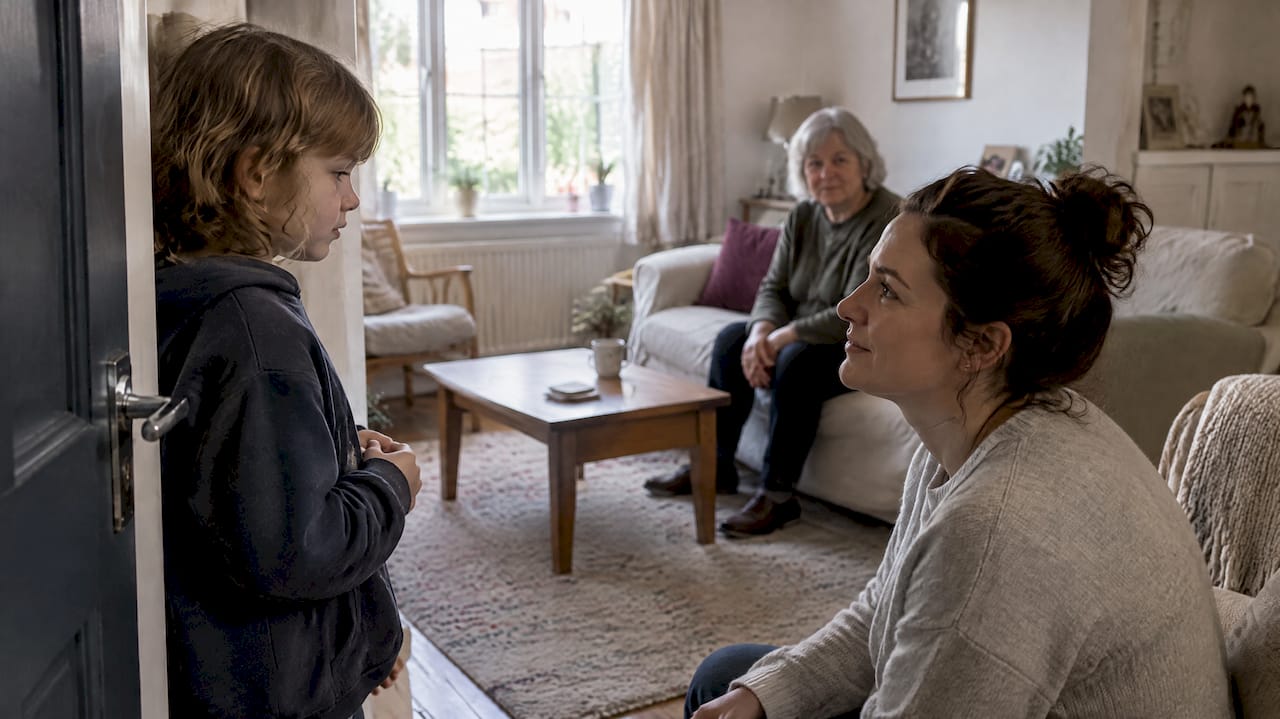
Our Children & Young People Free Assessment offers a guided assessment for children and teens, and gives you plain-language results you can talk through with relatives and with your child’s GP.
Can I get a report to hand to my doctor?
A Specialist Briefing is an optional one-time report, €20, that summarises your results for clinicians, created after you complete the free assessment. Parents can use the Youth Briefing, also €20. You can see what the adult version covers on the Specialist Briefing page. Omniprism does not collect your data, and the report is meant to open the clinical conversation, with the diagnosis left to the clinician.
Our perspective
I was diagnosed with ADHD at 42, and I built Omniprism because people who suspect they are neurodivergent often have no structured way to put it into words before they sit in front of a clinician.
We believe the first step should carry no pressure: no email, no account, no tracking. Our assessment gives an instant profile across 14 areas, in plain language, so you can see your patterns before you decide what to do next. For people who want to take results to a clinician, the Specialist Briefing is designed for easy use by healthcare professionals.
What matters most is that you leave the appointment understood. Examples beat labels, and a clear profile gives you both.
Valerio Cozzi
FAQ
Do I need a diagnosis before I talk to my doctor?
No. Mental Health UK states that a formal diagnosis is not needed to recognise possible neurodivergent traits or seek support. Black Country ICB says the same about asking a GP for help, and many services work on a needs-led basis.
Is self-identifying as neurodivergent valid?
Self-identification is welcomed in the neurodivergent community, according to Understood. It is not a medical diagnosis, and the CHOP roadmap notes that it does not open access to certain resources. A formal evaluation is a personal choice, and the clearest route to certainty.
How long should my notes be?
One page is enough. Include four or five dated examples, how long they have been happening, the impact on your life, and your request. Hand it over at the start of the appointment so the doctor can read along with you.
What can I do if I find the appointment overwhelming?
Ask for a longer appointment or a virtual one when booking, bring written notes, and ask for questions one at a time, as Trans Care BC suggests. Autism UK says you can ask for reasonable adjustments at any point.
Sources
- Neurodiversity and mental health, Mental Health UK
- What is neurodivergence?, Response
- What does it mean to be neurodivergent?, Understood
- ADHD and autism guidance, Black Country ICB (NHS)
- Getting a neurodiversity assessment, Hampshire CTSH
- Wondering if you’re autistic?, CHOP CAR Autism Roadmap
- Asking for reasonable adjustments, Autism UK
- Neurodivergent people, Trans Care BC
- Is it autism and if so, what next?, Echo Autism
- How to prepare for an autism or ADHD assessment, RTN Mental Health
- Going to the doctor when you’re autistic, Sensory Overload
- How to explain neurodivergence to family, Resilient Mind Counseling
- How do I tell my family I’m autistic?, Neurodiversion
- How to tell family members about your child’s challenges, Understood
- Sharing an autism diagnosis with family and friends, Child Mind Institute
- How to talk about your child’s disability, autism or ADHD, Raising Children Network
- The hidden pressure doctors face in everyday practice, The Gazette
Recommended
- Neurodivergence Self-Assessment Guide: What It Can and Can’t Tell You
- Copyable One Page Neurodiversity Report Examples for GP Appointments
- Neurodiversity Language Guide: Which Words to Use and Why
Written and edited by Valerio Cozzi, founder of Omniprism. Omniprism began after my own ADHD diagnosis at 42.
This article is educational. It is not medical advice, not a diagnosis, and not a substitute for assessment by a qualified clinician. The Omniprism self-assessment is free, needs no account and no email address, and runs entirely in your browser — your answers are never sent to a server. The optional Specialist Briefing report is a paid add-on.