Three Fixes Teachers Can Use to Make a Sensory Friendly Classroom
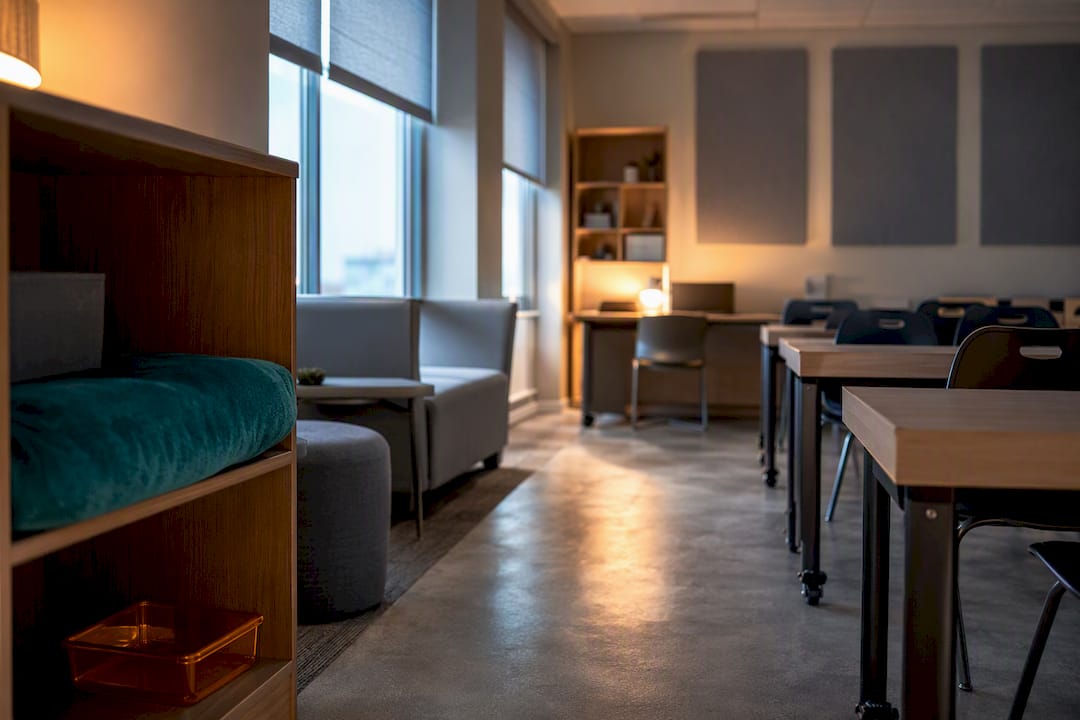
A sensory friendly classroom controls light, sound, and clutter so pupils with sensory processing differences can regulate and learn without constant overload. Start today with three changes: soften harsh lighting, cut predictable background noise, and set up a low-stimulus calm zone pupils can access without asking permission. Everything else, including audits and personalised plans, builds from those three.
TL;DR:
- Conduct regular sensory audits focusing on lighting, acoustics, and visual clutter, prioritizing quick, low-cost fixes like dimming lights and reducing wall displays.
- Use flexible seating and designated calm zones to give pupils real choices for movement and stillness that support their self-regulation needs.
- Trial sensory tools individually with clear objectives and time limits, documenting outcomes to tailor solutions rather than applying generic tools universally.
- Implement an assess, plan, do, review cycle for sensory needs to ensure adjustments evolve with pupils’ growing self-awareness and independence.
- Embed sensory considerations across the whole school, training staff at all levels and creating consistent routines that reduce unpredictability and sensory overload.
What is a quick sensory audit and classroom checklist?
Before changing anything, walk the room as if you were hypersensitive to light, sound, and touch. Environmental sensory audit templates used across UK schools focus on a short set of physical checks that take under twenty minutes and reveal most of the problems in a typical classroom, according to Locala’s audit checklist.
Run through this order:
- Stand under each light and note flicker, buzzing, or glare off whiteboards.
- Listen for mains hum from projectors, extractor fans, or old radiators.
- Count the number of different colours and patterns on the walls facing the main teaching area.
- Check chair legs for stoppers and note which seats scrape loudly on tiled floors.
- Map the route from door to desk. Note pinch points where pupils queue or brush past others.
Once you have the list, sort issues by two questions: how many pupils does this affect, and how cheap is the fix?
- High impact, low cost: mains hum, glare, chair scrape.
- High impact, higher cost: fixed fluorescent lighting, open-plan acoustics.
- Lower impact: cosmetic display choices.
Ask a SENCo or teaching assistant to run the audit termly, and gather pupil input directly. A five-minute chat or a simple thumbs-up/thumbs-down card system works better than a written survey for younger children.
How should the physical environment change (lighting, acoustics, displays)?
Lighting is usually the fastest win. Swap flickering fluorescent tubes for dimmable LED where budget allows, and use blinds rather than harsh direct sun through south-facing windows. Even without new fittings, angling desks away from glare off whiteboards removes a surprising amount of visual strain.
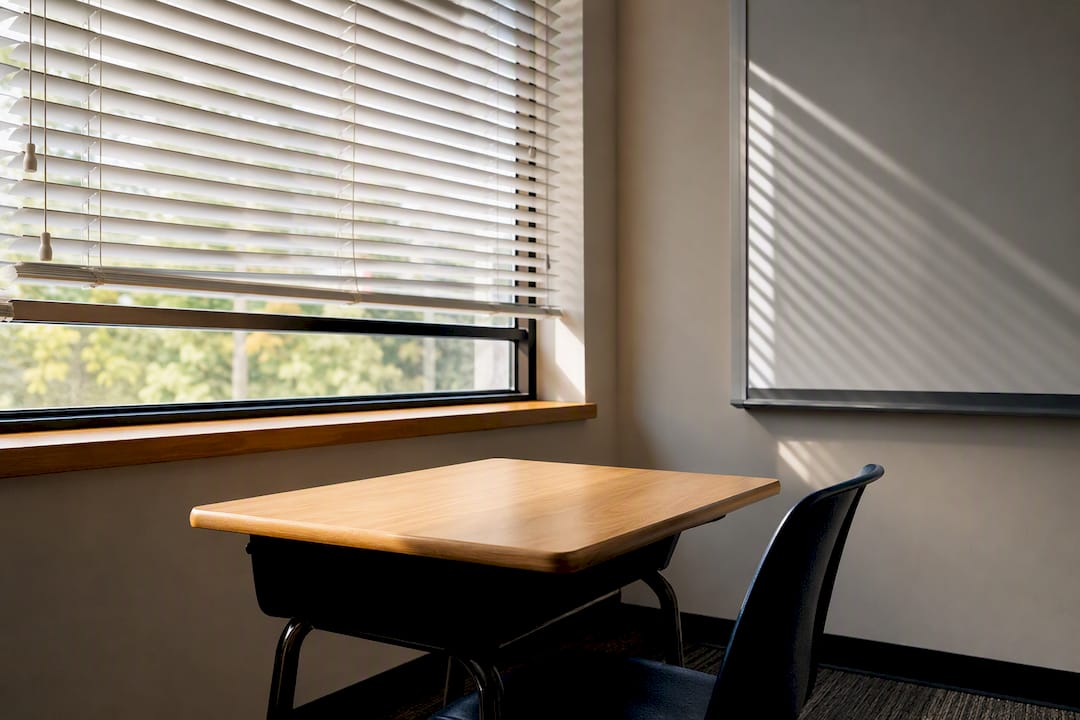
Acoustics come next. Felt pads under chair legs, rugs under high-traffic areas, and soft furnishings on hard walls cut both echo and the scrape-and-clatter noise that builds through a lesson. Scottish government guidance found that these small acoustic and clutter fixes often produce bigger regulation gains than expensive specialist equipment, because low-cost adjustments target the everyday triggers pupils actually encounter.
Visual clutter is the one educators underestimate most. A wall covered in bright, competing displays keeps a visually sensitive pupil scanning instead of focusing. Pick one feature wall, keep the rest calm, and use a consistent layout for timetables and instructions so pupils always know where to look.
- Dim or replace flickering lights near desks.
- Add felt pads to chair and table legs.
- Reduce wall displays to one clear focal point per side of the room.
- Turn off unused equipment that hums (projectors, old computers).
Pro Tip: Test your classroom at the time of day pupils actually struggle most, not first thing in the morning when the room is quiet and empty.
What seating and zones support self-regulation?
Flexible seating is not about buying novelty furniture. It is about giving pupils a genuine choice between movement and stillness without singling anyone out. Wobble cushions and standing desks suit pupils who need low-level movement to concentrate. Beanbags and floor cushions suit pupils who need to lower their sensory input during independent work.
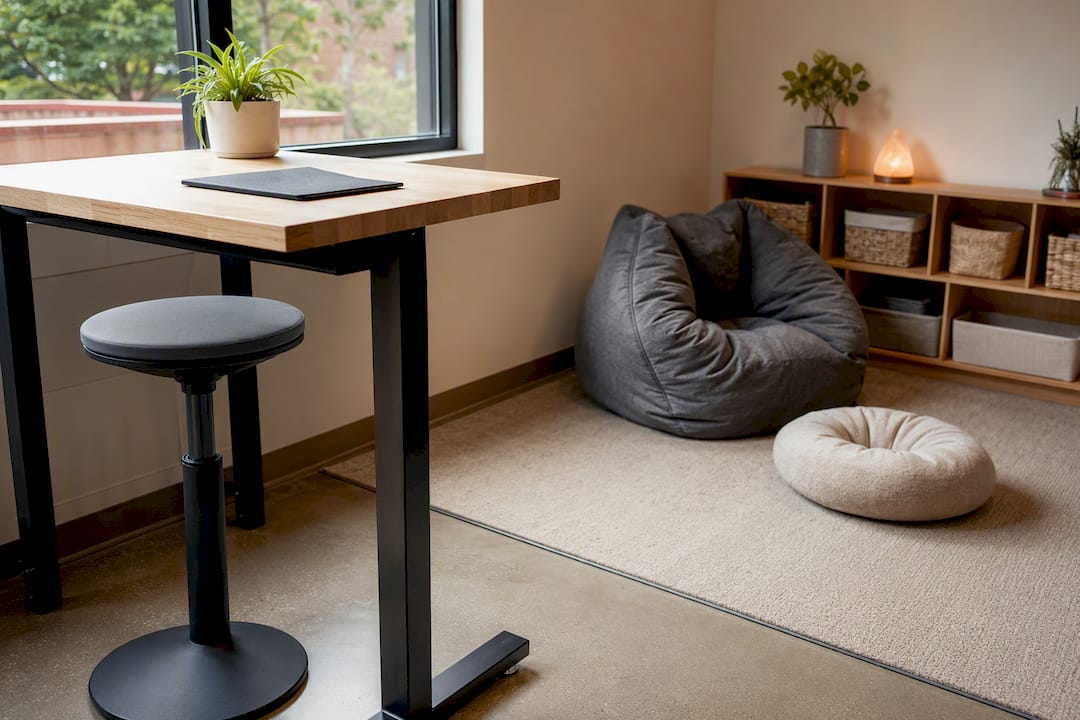
Design principles matter more than the furniture itself. A calm corner works only if it sits near enough to the teaching area that a pupil does not miss instruction, and far enough from the door that it is not a thoroughfare. Inclusive design guidance recommends predictable circulation routes and dedicated breakout space precisely because reducing incidental sensory clutter in movement paths supports independence.
Small changes help most:
- Position desks so no pupil sits with their back to a busy doorway.
- Keep one or two seats away from window glare or the loudest vent.
- Mark out a pause point pupils can move to without leaving the room.
How do you trial sensory tools like fidgets and headphones safely?
Treat every tool as an experiment, not a permanent fix. Set one clear objective (does this reduce fidgeting during independent reading, for example), a fixed trial period of one to two weeks, and a simple observation note logged daily. Different pupils respond in opposite directions to the same tool, so document outcomes rather than assuming what worked for one pupil will work for another.
Common tools and their trade-offs:
- Ear defenders: excellent for unpredictable noise (fire drills, assembly) but can isolate a pupil if worn constantly rather than at flagged trigger points.
- Fidget tools: help many pupils sustain attention, but a clicking or visually busy fidget can distract neighbours.
- Lap weights or weighted cushions: often calming for proprioceptive-seeking pupils, but need a clear time limit and are not appropriate for every diagnosis.
Access clashes are inevitable once several pupils have different needs in the same room. Practitioner toolkits recommend involving pupils directly in the solution, such as agreeing a muffled surface a pupil can tap instead of the desk, rather than banning the behaviour outright. A simple traffic-light card system lets a pupil signal “fine”, “getting overloaded”, or “need a break” without speaking, which avoids forcing them to mask discomfort just to keep the peace.
How does the assess, plan, do, review cycle work for sensory plans?
One-size-fits-all fixes rarely hold up for long. UK guidance on sensory processing needs points schools towards an assess, plan, do, review cycle rather than a fixed list of accommodations applied to everyone.
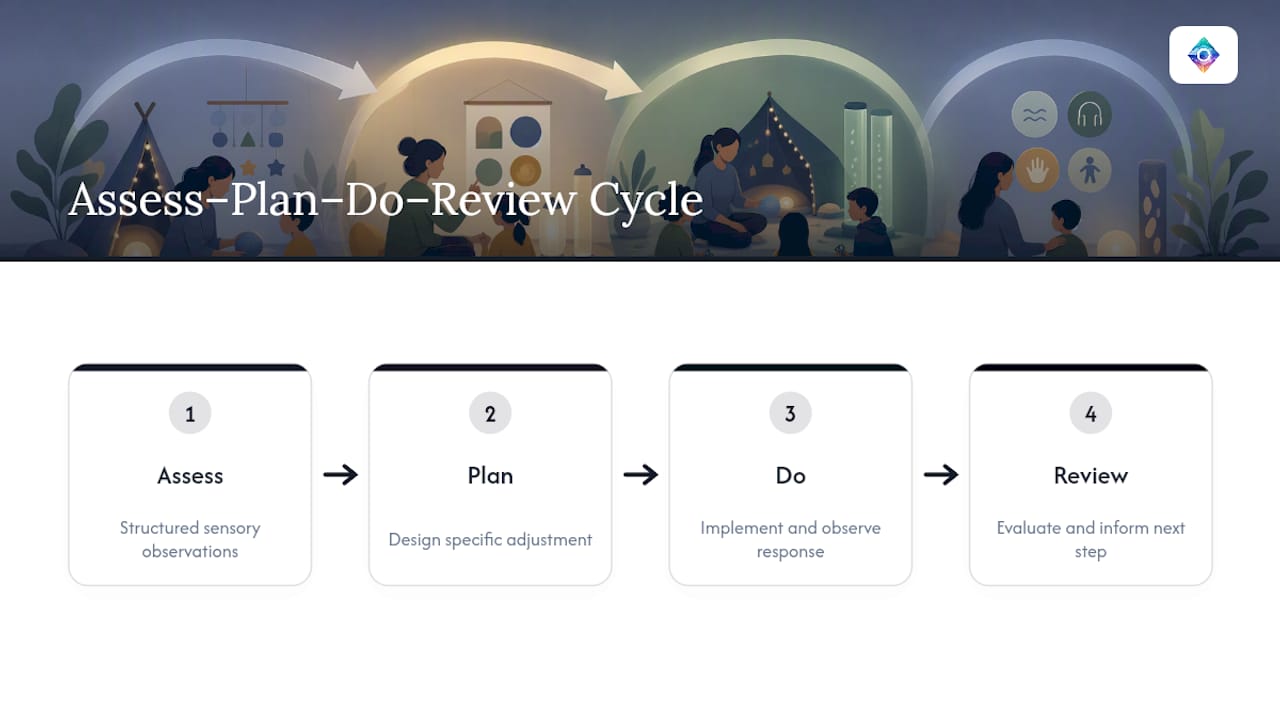
- Assess: combine direct observation, a short pupil self-report, and, where one exists, a sensory passport that records known triggers and preferences.
- Plan: write specific, time-limited adjustments with a named owner (class teacher, TA, SENCo) and a plain success measure, such as “fewer than two overload incidents per week”.
- Do: put the adjustments into practice and keep a brief running log rather than relying on memory at review time.
- Review: hold a formal check-in every four to eight weeks, adjusting the plan based on what the log and pupil feedback actually show.
The point of this cycle is not permanent accommodation. Guidance is explicit that plans should evolve so pupils gradually build the self-awareness to recognise their own preferences and regulate independently, rather than staying dependent on adult-managed fixes indefinitely. A pupil who understands why they need headphones during transition time is in a far stronger position than one who is simply handed them without explanation.
What does a whole-school approach to sensory needs look like?
Environmental changes made in one classroom and ignored everywhere else create inconsistency that pupils notice immediately. The Neurodivergence Task and Finish Group report recommends embedding flexible seating, quiet spaces, and appropriate lighting as standard practice across a school, not as one teacher’s personal project.
Training needs to reach beyond the classroom teacher. Midday supervisors, supply staff, and volunteers often encounter pupils at their most dysregulated moments (the playground, the dinner hall, an unfamiliar cover lesson) yet are frequently the last to know a pupil’s plan exists.
- Train SENCos and class teachers on writing and reviewing sensory passports.
- Brief midday supervisors and supply staff on flagged pupils before, not during, an incident.
- Embed sensory considerations into transition protocols and display policies as written procedure, not informal habit.
How can routines and visual supports reduce sensory overload?
Unpredictability is often the trigger, not the noise or light itself. Visual timetables, five-minute countdowns before a change of activity, and short verbal scripts (“in five minutes we tidy up, then line up”) give pupils time to prepare rather than react.
- Use a visible countdown before transitions, assemblies, or fire drills.
- Stagger queuing and dining times where possible to reduce crowding at pinch points.
- Build a short movement or sensory break into lessons longer than 30 minutes.
How do you know if the changes are actually working?
Track a small, consistent set of indicators rather than relying on gut feeling. Attendance, incident logs, and engagement during lessons give an objective picture; a brief pupil self-report (“how did today feel, one to five”) adds the subjective side that numbers miss.
- Compare incident counts before and after a change, not just anecdotally.
- Ask pupils directly rather than assuming improvement from adult observation alone.
- Review every four to eight weeks and involve occupational therapists or specialist teachers if incidents persist despite environmental fixes.
A dedicated sensory room is rarely the first step. Start with whole-classroom environmental changes and reserve capital investment for cases where evidence from the review cycle genuinely justifies it.
Why I think assessment data changes how classrooms get built
I was diagnosed with ADHD at 42, long after school, so I never had a teacher who understood why a humming light or a scraping chair could derail an entire lesson for me. What strikes me now, working on assessment tools, is how much clearer a teacher’s decisions become once they have structured evidence instead of guesswork about a single pupil’s triggers.
That is really what an assess-plan-do-review cycle is doing: turning vague impressions (“she seems distracted”) into something specific enough to act on. The goal is never to build a permanent workaround. It is to give a pupil enough insight into their own sensory profile that they can eventually manage transitions and triggers themselves, with the classroom as scaffolding rather than a crutch.
The take that most sensory guidance avoids saying out loud
The strongest evidence in this space points somewhere uncomfortable for schools that love a big capital project: the cheapest fixes usually work best. Felt pads, dimmed lights, and a quieter chair scrape outperform a five-figure sensory room for most day-to-day regulation needs, and the gov.scot guidance says as much directly. That is not a popular message when a sensory room photographs well for a school website.
Where conventional advice falls short is treating sensory tools as universal solutions rather than individual experiments. Ear defenders that calm one pupil will distress another. A weighted lap pad that helps concentration for one child does nothing for another. Schools that skip the trial and observation step, and just distribute the same toolkit to every flagged pupil, waste money and miss the pupils who actually need something different.
If you take one thing from this, prioritise the audit and the trial protocol over the shopping list. Buying fidgets before you know what triggers a specific pupil is solving the wrong problem.
— Valerio Cozzi
Where a structured self-assessment fits into your sensory plan
Assess-plan-do-review only works when the “assess” stage is genuinely informed, and that is harder than it sounds when a pupil cannot easily articulate what overwhelms them. Omniprism’s self-assessment for children (ages 7 to 10) and its assessment for young people aged 11 to 13 give structured, plain-language profiles across 14 domains, including sensory processing, without requiring weeks of tracking or a clinical referral first.
For a SENCo or parent trying to build a pupil’s sensory passport, that instant profile becomes a starting point for the conversation, not the end of it. Results can feed directly into the plan stage of your review cycle, and they give parents and specialists a shared, concrete reference point rather than a page of general impressions. Where a deeper clinical conversation is needed, the optional Specialist Briefing report summarises results in a format built for that discussion. Start with the free self-assessment on Omniprism to see whether it fits into the pupil’s next review.
Where to find the underlying guidance and toolkits
For policy-level detail on embedding sensory-friendly design across a whole school, the Neurodivergence Task and Finish Group report is the primary UK reference. Scottish schools and those wanting practical detail on low-cost adjustments should read the gov.scot sensory-inclusive learning environments guidance directly. For a ready-made checklist, the Locala environmental sensory audit template covers most of what a classroom walk-through needs. If you are decluttering displays and storage as part of your changes, practical organisation tips for a smoother transition offer useful groundwork beyond the classroom itself.
Sources
- Gov
- Derbyshire local offer: supporting sensory processing needs
- NESTL Toolkit — Neurodivergent education resources
- Environmental sensory audit and checklist for schools and classrooms (Locala)
FAQ
What makes a classroom sensory friendly?
A classroom becomes sensory friendly when lighting, noise, and visual clutter are actively managed and pupils have access to a calm, low-stimulus space without needing to ask for it.
How much does it cost to make a classroom sensory friendly?
Most effective changes cost very little: felt pads, dimmed lighting, decluttered walls, and quieter routines outperform expensive sensory rooms for everyday regulation, according to Scottish government guidance.
How often should a sensory plan be reviewed?
A four to eight week review cycle is a practical starting point, checked against attendance, incident logs, and pupil self-report rather than gut feeling alone.
Do all neurodiverse pupils need the same sensory tools?
No. Tools like ear defenders, fidgets, or weighted items should be trialled individually, since a tool that calms one pupil can distress another with a different sensory profile.
Can a self-assessment tool help with classroom sensory planning?
Yes. A structured self-assessment such as Omniprism’s tool for children and young people can surface sensory preferences quickly, giving educators and parents a concrete starting point for a pupil’s plan.
Recommended
- Workplace Accommodations for ADHD: A Practical Guide
- What Is Pathological Demand Avoidance, and What Helps?
- ADHD Red Flags: What Parents and Adults Should Know
- Giftedness vs Autism: What Parents and Teachers Need to Know
Written and edited by Valerio Cozzi, founder of Omniprism. Omniprism began after my own ADHD diagnosis at 42.
This article is educational. It is not medical advice, not a diagnosis, and not a substitute for assessment by a qualified clinician. The Omniprism self-assessment is free, needs no account and no email address, and runs entirely in your browser — your answers are never sent to a server. The optional Specialist Briefing report is a paid add-on.