Sensory Diets for Adults: Start With a Two Minute Self Assessment
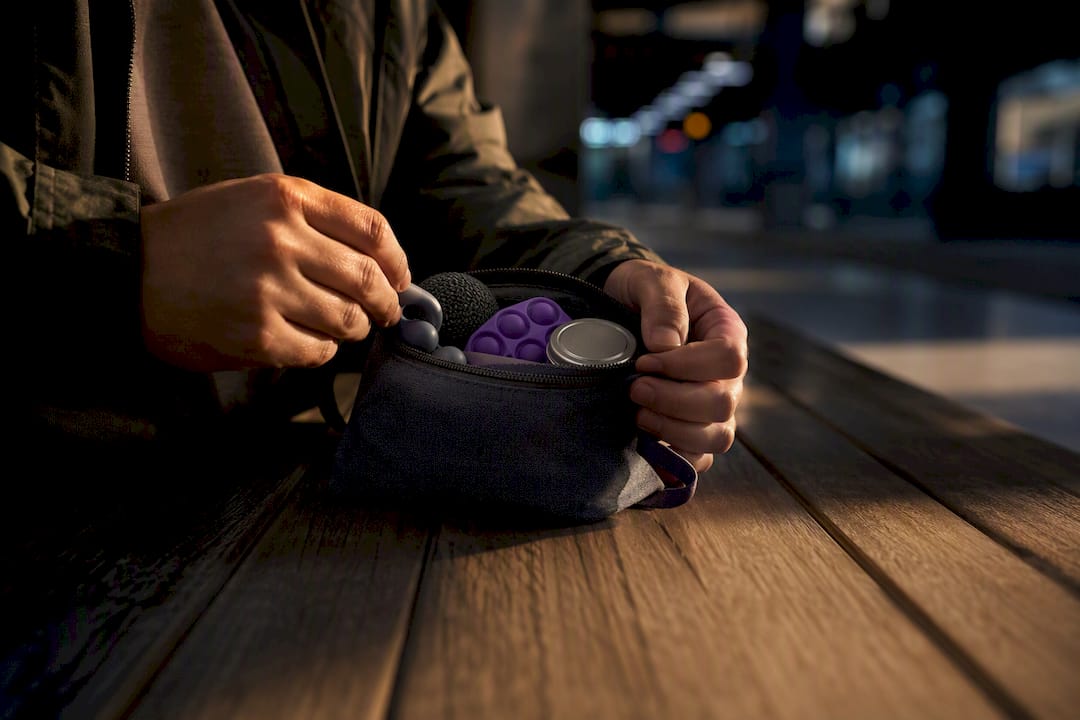
A sensory diet for adults is a personalized set of sensory inputs, environmental tweaks, and recovery breaks used to keep your nervous system in a workable range. It helps with self-regulation, overload prevention, and focus, especially if you’re autistic, have ADHD, or run high on sensory sensitivity. Start small: pick one portable tool, like ear defenders or a weighted lap pad, and track what changes over a week.
TL;DR:
- Sensory diets for adults are highly individualized, with no single protocol; effectiveness varies over time, with tools needing regular adjustment and testing.
- Building a sensory diet involves a quick self-assessment to identify triggers and glimmers, plus a tiered tool ladder for baseline, situational, and emergency supports.
- Common tools include noise-cancelling headphones, weighted items, and low-glare lighting, with specific strategies tailored to each of the eight sensory channels.
- Strategies for managing overload include immediate input reduction, grounding techniques, breathing exercises, and having a prepared exit plan to leave overwhelming environments.
- Consulting an occupational therapist is advisable if overload persists, safety is compromised, or daily functioning is significantly affected, especially with detailed tracking and testing results.
Table of Contents
- Why Adults Use Sensory Diets and What Benefits to Expect
- How to Design a Personalized Sensory Diet That Fits Your Life
- Sensory Activities by System: What to Try and What to Watch For
- Building Sensory Support Into a Real Adult Schedule
- What to Do When Sensory Overload Hits
- When to Bring in an Occupational Therapist
- A Few Honest Notes on Trial and Error
- Sources
Why Adults Use Sensory Diets and What Benefits to Expect
The honest answer: a sensory diet won’t cure anything, but it can measurably change how much of your day feels survivable. A scoping review of 17 studies on sensory modulation interventions found they reduced distress and improved participation in adults with mental illness, using proprioceptive, vestibular, and tactile tools across programs ranging from two days to three years. That range tells you something important. There’s no single dose that works. What worked for one person’s six-month trial might not fit your Tuesday.
Realistic benefits include:
- Better regulation during predictable stressors like commutes or meetings
- Sharper focus, particularly for adults with ADHD traits
- Less overwhelm in loud, bright, or crowded environments
- Improved stamina by the end of demanding days
- Fewer shutdowns or meltdowns triggered by sensory buildup
Early research on app-delivered sensory diets for ADHD found improvements in concentration and reduced impulsivity, according to Psychology Today’s coverage of the field, though protocols still vary widely between studies. Autistic adults, people with ADHD, and those managing anxiety or PTSD tend to see the clearest gains, largely because sensory dysregulation shows up so often in those groups. If you fall into one of those categories and haven’t tried structured sensory supports yet, you’re not behind. Most adults never get introduced to this at all; sensory diets get handed to kids in occupational therapy far more often than to grown-ups managing the same nervous system on their own.
How to Design a Personalized Sensory Diet That Fits Your Life
Skip the clipboard-and-chart approach you’ll find in pediatric occupational therapy resources. Adults need something faster to build and easier to carry.
Step 1: Run a two-minute self-assessment. Are you a seeker or an avoider? Seekers crave movement, pressure, noise, and texture. Avoiders need less input, not more. Most people are a mix, seeking in one channel (say, deep pressure) while avoiding another (loud, unpredictable sound). Write down three contexts that drain you and three that recharge you. That’s your starting map.
Step 2: Separate triggers from glimmers. Triggers are the specific inputs that eat into your capacity. Fluorescent lighting, overlapping conversations, scratchy fabric, unexpected touch. Glimmers are what restores you. Weight on your shoulders, a specific song, cold water on your wrists, silence. Most adults can name their triggers instantly but struggle to name glimmers because nobody ever asked. Sit with that question for a day before moving on.
Step 3: Build a tool ladder. Structure it in three tiers. Baseline supports are things you use daily regardless of stress level, like noise-reducing earbuds during commutes. Situational anchors are tools for specific known stressors, like a fidget for long meetings. Emergency recovery items are for active overload: something you keep on you at all times, like a weighted item or a strong mint.
Step 4: Test in short cycles. Give each new tool one to two weeks before judging it. Keep a short note on your phone: what you tried, where, and whether your stress level dropped, rose, or stayed flat. This isn’t a wellness journal you need to maintain forever. It’s a scrap heap of quick data points that helps you separate what genuinely works from what just felt novel for a day.
Pro Tip: Test one tool at a time. Adding three new sensory supports in the same week makes it impossible to know which one actually moved the needle.
Sensory-friendly accommodations don’t have to be dramatic. Something as small as dimmer lighting or permission to fidget in a meeting can meaningfully lower the sensory load for autistic adults navigating shared spaces. The goal is a short list you can actually maintain, not an elaborate system you abandon by week three.
Sensory Activities by System: What to Try and What to Watch For
Different sensory systems need different tools, and mixing them up randomly rarely works. Here’s what tends to calm versus alert each system, organized by the eight sensory channels most relevant to adults.
Vestibular (balance and movement). Gentle rocking, a hammock chair, or slow head tilts tend to calm; spinning or fast direction changes tend to alert. If dizziness, vertigo, or inner ear issues are part of your history, go cautious here and stick to low-intensity options like slow swaying rather than anything involving quick rotation.

Proprioceptive (body pressure and joint input). This is often the highest-value system for adults because it’s discreet and reliably calming. Heavy work like carrying a loaded bag, wall push-ups, resistance band pulls, or a weighted blanket during downtime all deliver deep pressure input. Many adults find this the single most effective category to build a baseline around.
Tactile (touch). Fidget tools, textured objects like a smooth stone or a stress ball, and soft or weighted fabrics work for those who need extra tactile input. If you’re touch-avoidant, seamless clothing and fabric without tags matter more than any gadget.
Auditory (sound). Noise-cancelling headphones are the most commonly cited tool in practical guidance for autistic and ADHD adults, and for good reason: they’re portable, socially unremarkable, and effective in almost any environment. White noise or a curated low-stimulation playlist works for background buildup; paced breathing (four counts in, six counts out) helps when you can’t use headphones at all.
Visual. Low-glare lighting, tinted glasses, and decluttered visual fields reduce input for adults who get overloaded by bright or busy spaces. Blue-light or anti-glare screen filters help if you spend hours on a monitor.
Olfactory and gustatory (smell and taste). Calming scents like lavender or citrus work for some people; strong, specific flavors like mint or sour candy work for others, especially as a fast reset during a meeting you can’t leave. Chewy or crunchy snacks provide oral input that doubles as a subtle regulation tool. For anyone exploring taste-based sensory tools further, taste-safe sensory play ideas built for texture-sensitive mouths translate surprisingly well into adult-safe adaptations, just scaled to adult snack choices rather than toddler-safe materials.
Interoception (internal body awareness). Many adults with sensory processing differences struggle to notice hunger, thirst, or temperature until it’s extreme. Set phone reminders to check in: are you thirsty, too hot, overdue for food? This single habit prevents a surprising share of “random” meltdowns that are actually just unmet basic needs stacking on top of sensory load.
Building Sensory Support Into a Real Adult Schedule
A sensory diet only works if it survives contact with an actual workday. That means anchoring supports before, during, and after the moments that cost you the most.
- Office day. Before: five minutes of proprioceptive input (wall push-ups) before you leave the house. During: noise-reducing earbuds at your desk, a fidget in your pocket for meetings. After: a decompression window with no talking required, even ten minutes in the car before walking inside.
- Long meeting. Before: a strong mint or gum to prime focus. During: a discreet fidget under the table, a weighted item on your lap if seated. After: a short walk, even to the bathroom and back, to reset before the next task.
- Social event. Before: decide your exit time in advance. During: step outside every 45 to 60 minutes for a sensory reset. After: silence, dim lighting, and zero obligations for at least an hour.
- Travel day. Before: pack your kit the night before, never the morning of. During: headphones on before boarding, not after. After: build in a buffer day if possible; travel recovery is real and often ignored.
A portable kit should stay small enough to forget you’re carrying it:
- Ear defenders or noise-cancelling earbuds
- Sunglasses or a ball cap for glare
- One tactile fidget
- A chewable snack or gum
- A compact scent (rollerball or small tin)
At work, you don’t need to disclose a diagnosis to ask for a small accommodation. A script as simple as “I focus better with headphones on for detail work, is that alright?” or “Can I take this call from a quiet room?” covers most situations without turning into a longer conversation you didn’t want to have.
What to Do When Sensory Overload Hits
Overload rarely arrives without warning, even when it feels sudden. Watch for early signals: clenched jaw, racing thoughts, sudden irritability, or the urge to cover your ears or eyes.
- Do reduce one input immediately, sound is usually the fastest to cut with headphones or leaving the room.
- Don’t try to push through a full meeting or event once you’ve hit this stage; capacity doesn’t refill on willpower.
- Apply deep pressure or grounding, a firm self-hug, pressing palms against a wall, or gripping something cold.
- Use a short breathing pattern, four seconds in, six seconds out, repeated five times.
- Have an exit plan ready, know your nearest quiet space before you need it, not after.
Pro Tip: Write your exit script in advance: “I need five minutes, I’ll be right back.” Rehearsing it once makes it far easier to say in the moment.
Keep backup supports in more than one place, home, bag, and desk drawer, so recovery never depends on remembering to pack anything.
When to Bring in an Occupational Therapist
Self-directed strategies solve a lot, but not everything. Occupational therapists trained in sensory integration bring structured assessment and access to tools like sensory rooms, weighted equipment, and guided exposure protocols that are hard to replicate alone. Healthline’s overview of treatment options notes that OT-led strategies often pair with lifestyle changes and sometimes cognitive behavioral therapy to reframe sensory responses.
Consider a referral if you notice:
- Overload that persists even after testing multiple self-directed tools
- Safety risks, like dissociating while driving or during work tasks
- Functional impairment that affects your job, relationships, or daily routine
Before that appointment, bring your tracking notes, your tool ladder, and any results from a neurodivergence self-assessment covering sensory processing alongside traits like ADHD and autism. Walking in with specifics turns a vague “I struggle with noise” into a clinical starting point a therapist can actually work with.
A Few Honest Notes on Trial and Error
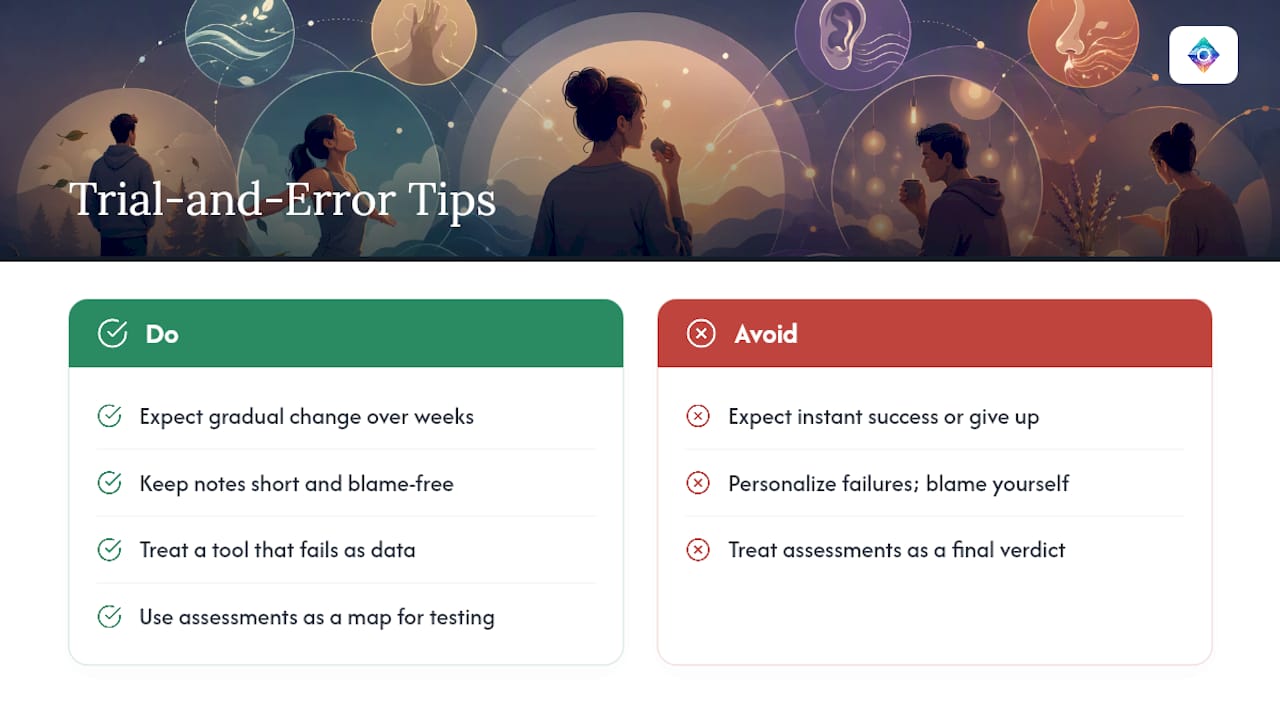
Most adults expect a sensory diet to work immediately or write it off entirely. Neither reaction serves you. The tool ladder you build in week one will look different by week six, and that’s not failure, it’s the process functioning correctly.
Keep your notes short and blame-free. If a tool doesn’t help, that’s data, not a personal shortcoming. Use whatever self-assessment results you have, whether from a clinician or a tool like Omniprism, as a map for what to test first rather than a verdict on what’s wrong with you.
— Valerio
Sources
The clearest clinical grounding on this topic comes from a scoping review of sensory modulation interventions, which mapped 17 studies using proprioceptive, vestibular, and tactile tools across widely varying program lengths. For the practical mechanics of building and adjusting a plan, Creating a Personal Sensory Diet and Overload Plan breaks down testing cycles and recovery rules in plain language. Psychology Today’s explainer covers early evidence on concentration gains, and Healthline’s treatment overview outlines where occupational therapy and CBT fit into the bigger picture.
- Sensory modulation interventions for adults with mental illness: A scoping review
- What Is a Sensory Diet? | Psychology Today
- Sensory processing disorder in adults: Treatments and management | Healthline